Tuesday, March 23, 2010

A Delusive Art

A delusive art is what Charlotte Smith defines the game of a muse in Sonnet I. Therefore it is not surprising that the tone of the poem is overcast by a delusive and melancholy state as well. The Old English Dictionary defines delude as “to frustrate the aim or purpose of….” And the muse does exactly this – she confuses our feelings between friendship and unhappy love, between serenity and turmoil. But there must be more than just the muse on the surface.

As I read the sonnet over and over again I could not escape the idea of the muse representing the wildness of nature and its delusive state as well. Nature tricks us and frustrates us in the same way as a muse. It is pristine and beautiful and yet can be destructive and horrific without any notice. Nature tempts us and frustrates us but we would not be able to survive without the natural world and its elements.

Charlotte Smith notes that - those who never learn of the muse’s delusive art
will be much happier. However this is also true in the representation of the wildness of nature. Those who turn a blind eye to the destructive beauty of nature are likely to be happier than those who have experienced firsthand the power and mockery of natural disasters. The picture below demonstrates the muse of nature – beautiful but destructive… a delusive art.


Top Left: Land before Hurricane Katrina
Bottom Left: Land after Hurricane Katrina
Right: The Delusive Art of the Nature

Tuesday, March 16, 2010

A Purple Orgasm?

In the sonnet “On Seeing Miss Helen Maria Williams Weep at a Tale of Distress” the color purple is representative of the blood flowing through Wordsworth veins. The pumping of Wordsworth is a direct consequence of seeing Miss Helen cry. Purple is not only a symbolism of royalty as we typically assume, but it is also the combination of red and blue. Red is symbolic of strong emotions and blue is symbolic of the human emotion of sadness; the combination of these two colors express the sentimental tone of the poem.

In the last half of the poem the two colors of red and blue seem to collide again although purple is only mentioned in the first line of the sonnet. “Dear was the pause of life…” can be interpreted as a sexual orgasm – and as we all know and orgasm is filled with strong emotions from both participating parties and the human emotion of sadness when the pleasure is over. The two emotions combined create the color purple which we originally examined, for intensely flowing blood is needed for an orgasm. The idea of two colors uniting and being representative of an orgasm seems rather abstract but can be represented by the painting below.


Wednesday, March 3, 2010

Symbolism of Five?

For five years Wordsworth travels about and writing his ballads and for five years he has not seen the very spot in which he stands. “Tintern Abbey” is about returning to a town after a five year exclusion into nature and the collision of past and present thoughts.

Yes – the number five represents the actual years Wordsworth has been gone. But as I have learned there is always a deeper more “wild” meaning to the words that Wordsworth puts to the page. The number five symbolizes human life, and for Wordsworth his life has been drastically altered by his experiences in the past 5 years. He understands the difference between escaping what he dreads and following what he loves. This ballad is a type of autobiography of his life in a mere 160 sixty lines.

As Wordsworth is looking down onto the town there seems to be a picturesque balance between the babbling stream, cottages, grand old cypress and pastoral farms. In the town there is balance between the natural world and society, and he seems to be greatly satisfied with his place in the midst of it all.
The harmonious balance reminded me of another symbolism of five in the Wheel of Being used in both Celtic and Druid societies. It represents the four powers or elements united by a fifth... balance in all.

The symbolism of five only strengthens Wordsworth’s ballad and I believe it was no mere accident.


The five fold pattern of the Wheel of Being with the middle representing balance!


Wednesday, February 24, 2010

The Suffering of a Sick Soul

The lamb is often representative of suffering and sacrifice which is also true in the ballad The Last of the Flock written by Wordsworth. The narrator is first depicted with the lamb in his arms as he begins to tell his tale. After the Sheppard tells his life story of the sheep, focusing solely on his herd and how it grew from a single lamb, the man is inevitably left with only one lamb. The story – a complete circle, of suffering and sacrifice. The Sheppard bases his whole existence on the sheep, the more sheep he had, the more love he had and in the end he is left with neither sheep nor love.

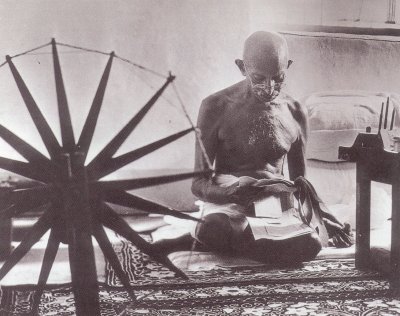
The question must be asked – can love really come from owning property such as the sheep? Mohandas Gandhi would argue that the Sheppard suffers not because he has to sacrifice his sheep for bread, but because he has a sick soul. We as human beings are on a fruitless drive, for something to satisfy the appetite of our hungry empty souls, and until we stop this cycle – we will not stop the suffering. From the context of the ballad we can infer that the Sheppard is poor, but he does have a house a wife and children. The Sheppard creates his own suffering by yearning for things that will bring him money instead of being satisfied with the simple life. Unlike the Sheppard, Gandhi was able to rid him self of selfless wants and live the simple life.

Wednesday, February 17, 2010

Compassion is a Survivor

Survivor – it is the term used to describe the meager character of Simon Lee in the ballad by Wordsworth entitled Simon Lee. I believe that Wordsworth constructs much of his ballad around this very word. In the ballad the narrator gives the audience reason to believe that the world is changing around Simon Lee who no longer seems to have a place in society. Simon Lee lives upon the village commons for his master is long deceased and although he has survived through the years, his skills as a legendary huntsman have not.

But must we confine the word survivor to something living?

Lyrical Ballads, which Simon Lee can be found in, was first published in 1798 which is also the start of the Industrial Revolution in Europe. The Industrial Revolution was a feat for mankind, but disastrous to nature; a disaster that Simon Lee most likely experienced towards the end of his life time (which can be noted in the symbolism of the dead old tree). Although people and trees cannot live on forever and survive the inevitable, there is something that can – human compassion – the very thing that the stranger displayed to Simon Lee which made tears flow from his heart! I couldn’t help but think that there will always be people in this world like Simon Lee who need compassion. Therefore it is our responsibility to ensure that compassion is a trait that will survive forever. The song "Compassion" does a great job of enforcing such an idea.

Wednesday, February 10, 2010

The Creation of a Melancholy World...

“In nature there is nothing melancholy,” and yet the speaker in Coleridge’s ballad, The Nightingale, recalls that the bird’s song has been accused of being exactly this - melancholy. The speaker however, is sitting upon an old mossy bridge watching the water flow silently beneath. It can be assumed the speaker himself is connected with nature and understands the beauty of the bird’s song.

However, in today’s society the thought of sitting on an old mossy bridge can seem rather abstract and distant. We have unintentionally taken the beauty out of nature in pursuit of a better life. Unfortunately, because of this separation, we ourselves have become a population of melancholy souls. The sweet song the Nightingale, instead of being delightful, reminds us of the sorrow we have in our hearts. It can be argued that “When we heal the earth, we heal ourselves.” Coleridge gives a great example of this when he speaks of the child whose cries are comforted once taken outside into the pristine and undisturbed moonlight.

A child such as Severn Suzuku, who pleads to the people of the world to save the environment for the children of the future; a child who cries at night and cannot be comforted by becoming one with undisturbed nature because it no longer exists.

Wednesday, February 3, 2010

Eternal Mental Purgatory

Many Christians wear the crucifix as a reminder of the love Jesus Christ had for his people, but more importantly that he died for their sins. I believe there is a very strong allusion to the same type of relationship between the Ancyent Marinere and the Albatross. In The Rime of the Ancyent Marinere, Wordsworth writes in the last stanza of Part II “Instead of the Cross the Albatross about my neck was hung.” There is never a reason for why the Marinere shot the albatross, but because of this sin the Albatross lost it's life. The Marinere becomes forever in debt to the Albatross and is forced to tell his story over and over again by Life-in-Death.

Similarly, Christians are in forever debt to Jesus Christ who died on the cross for their sins. They must spend their entire life trying to repay a debt that will never be settled, leaving an everlasting moral guilt. “Not everyone who says to me, ‘Lord, Lord,’ will enter the Kingdom of Heaven” (Mt. 7:21). One must truly and full heartedly repent their sins to enter heaven. I cannot help but wonder would the Marinere truly be sorry for what he did if it were not for his punishment? Perhaps this is why Life-in-Death won the dice match to keep the Marinere in an eternal mental purgatory. A state of agony that is displayed in the Marinere's face of sorrow.